- Corby Business Centre, Corby, Northants

Subfloor Ventilation
Get a Quote
Subfloor Condensation: The Hidden Cause of Damp in Thousands of Homes
If you’ve got a suspended timber floor (floorboards over a void), the space underneath your feet is just as important as what’s happening inside your rooms. When that underfloor void can’t breathe properly, moisture builds up. When moisture builds up, the timber gets cold, the floor gets cold, and the rooms above become humid.
And that’s when you start seeing:
Black mould in corners
Cold, damp external walls
“Rising damp” symptoms
Musty smells
Rotten joists or wall plates
Condensation on windows even with heating on
Most homeowners — and sadly many “damp specialists” — never check the subfloor. At Condentrol, we always do.
Why Subfloor Ventilation Matters
A suspended timber floor relies on natural airflow beneath it. Traditionally, this was achieved using airbricks front and back, allowing fresh air to pass under the entire house. But over the years things change:
Ground levels get raised
Patios and driveways block airbricks
Extensions cut off airflow
Airbricks get clogged with soil
Radiators, carpets and furniture make floors colder
Modern living generates more moisture
With no air movement, underfloor moisture stagnates — and this affects the whole home.
Common Signs of Subfloor Condensation
If you’re seeing any of these, the problem is likely below the floor, not in the walls:
Cold rooms even when heated
Persistent damp patches on lower walls
Tide marks mistaken for “rising damp”
Mould behind sofas or furniture
Timber decay in joists, noggins or wall plates
Musty, earthy smells
Condensation on windows throughout the day
If the void is damp, the air above it will be damp — it’s that simple.
Misdiagnosed as Rising Damp (All the Time)
This is where the industry gets it wrong. When plaster touches a solid floor or the DPC is bridged, moisture wicks upward and looks like rising damp — but it isn’t. When the subfloor is cold and wet, walls absorb the cold and become condensation points — and again, it gets labelled rising damp. Chemical injections don’t fix any of this.
Airflow does.
This is why most injected DPC jobs fail — they were never needed in the first place.
How Condentrol Fixes Subfloor Ventilation Problems
We inspect everything: the void, airbricks, ground levels, bridging, timber condition and airflow direction. Then we apply one or more practical solutions:
✓ Unblocking or reinstating airbricks Simple, cheap, and often the most effective.
✓ Lowering external ground levels where possible Stops bridging of the original DPC.
✓ Adding telescopic vents To improve airflow pathways.
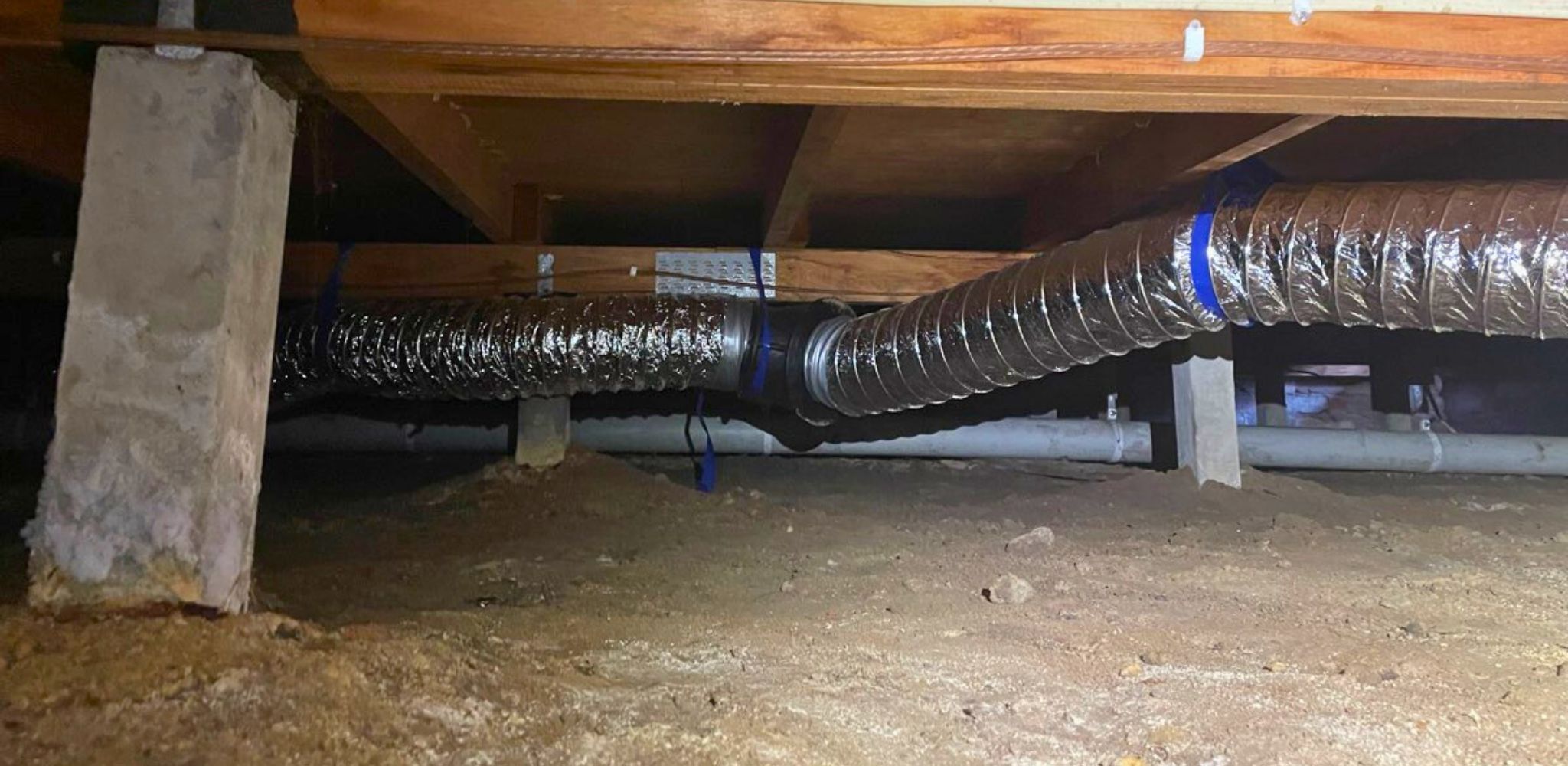
✓ Mechanical underfloor ventilation Where natural ventilation cannot be restored. A small, ultra-quiet fan creates a controlled airflow that removes the stagnant moisture and keeps the void dry.
✓ Ensuring moisture from inside is managed Condensation above + stagnation below = perfect mould conditions. We solve both.
Before & After: What Changes?
Once the void dries out:
Floors become warmer
Internal humidity drops
Walls stop getting wet
Mould disappears
Rooms feel fresher
Timber decay stops progressing
Heating becomes more effective
This is the foundation of a healthy home — literally.
Why Condentrol Leads in Subfloor Diagnosis
Most companies don’t even lift a hatch or look under the boards. We do — because evidence is everything. Our approach stops misdiagnosis, stops unnecessary injections, and actually fixes the problem.

At Condentrol, we specialise in identifying the real causes of damp, mould, and condensation in UK homes.
Follow Us
Links
Services
Contact Details
If you have questions you can contact us
- Corby Business Centre, Corby, Northants
2025 © All rights reserved by Condentrol